Susan Hirt Hagen Center for Community Outreach, Research, and Evaluation
Penn State Behrend
Helping young people thrive, with relationships and evidence.
Public-source context is draft narrative, not approved report copy. Results, voices and rosters remain pending; archival facility images are approved for working-draft use only. [Report-wide period and cutoff pending — no full-year results claimed]
DRAFT · PLACEHOLDERS · NOT FOR PUBLICATION
Contents
01The year in perspective—
022026 at a glance—
03Community Outreach—
04Research & Evaluation—
05Growing what CORE can do—
06What we learned and what’s next—
07The people and partners behind it—
About this draft. This working draft includes public-source context, not approved report copy. Content in brackets is a placeholder awaiting verified year-end results, cleared images and quotes, and leadership approval. It is not for publication or distribution.
DRAFT · PLACEHOLDERS · NOT FOR PUBLICATION
01
Chapter 01
The year in perspective
Relationships give the work its purpose. Evidence helps ask what comes next.
Young people grow through the relationships around them. At Penn State Behrend, Susan Hirt Hagen's Center for Community Outreach and Research and Evaluation brings mentoring, training, applied research, and evaluation into that shared space. This report starts with publicly documented work.
[Report-wide period and cutoff pending — no full-year results claimed]
Mentoring & Training — supporting connection and resilience through activity-based mentoring and training for the people who work with young people.
Research & Evaluation — helping teams frame questions, understand programs and use evidence to inform decisions.
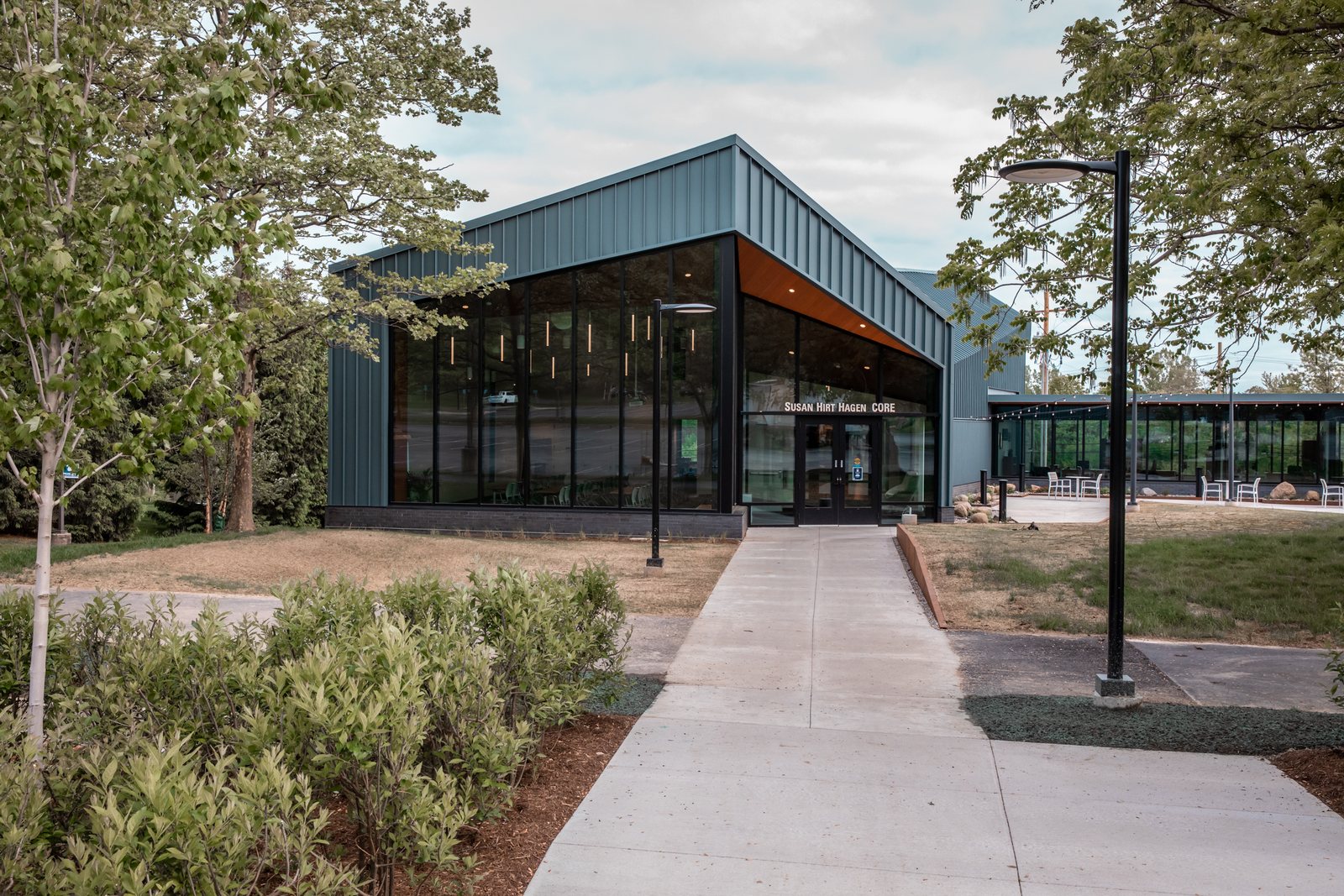
Exterior of the Susan Hirt Hagen CORE facility at Penn State Behrend
Archival photograph · 2022 · Working-draft use only; publication clearance and credit pending.
DRAFT · PLACEHOLDERS · NOT FOR PUBLICATION
Perspective · continued
Our mission
CORE helps young people build resilience and strengthens the communities they call home.
From the director
A message from James J. Hodge, Director
What helps a young person build the confidence to try again, ask for help, or see a different future for themselves? At Susan Hirt Hagen CORE, that question connects our work in schools and communities with the research we do at Penn State Behrend.
In 2026, that connection took shape in different ways. In Erie County schools, mentoring gave young people time with someone who could listen and encourage them. In our research and evaluation work, we helped organizations ask clearer questions about their programs, understand what the evidence was telling them, and consider what to do next. Penn State Behrend students contributed as mentors and researchers, bringing what they were learning into the community and bringing what they learned there back to campus.
One lesson from this year is worth carrying forward: we do our best work when we start by listening to the people closest to the need. That means making room for what a student, educator, or community partner sees before deciding where CORE can be most useful.
In the chapters that follow, you’ll see who took part, what we learned alongside our partners, and where we still have questions. To the schools, families, mentors, students, and community organizations who made this work possible: thank you for shaping it with us.
James J. Hodge, Ph.D., Director, Susan Hirt Hagen CORE
Closer to Erie County schools.
Connected to more of Penn State.
In 2026, more Erie County schools turned to CORE for support, and a formal partnership with Penn State’s Social Science Research Institute opened a new path for CORE to support research teams across the University. The two developments reflect what CORE brings to its work: experience alongside schools and communities, and the research and evaluation expertise to help partners learn what’s working.
01 · More schools came into the conversation.
Presentations to educators and superintendents led to new requests for support. On campus, Mentor Project recruitment brought in new volunteers from beyond psychology, helping provide coverage at mentoring sites.
[verified number pending]
02 · Program evaluation gained a wider role.
CORE joined the Social Science Research Institute as a research service unit while keeping its home at Penn State Behrend. As part of the new relationship, CORE was named lead evaluator for SSRI’s five-year strategic plan.
[verified number pending]
03 · A new partnership connects school outreach and research.
An SSRI seed grant supports CORE and United Way of Erie County in developing mental health programming for students in Erie County Community Schools, creating resources for school staff and families, and evaluating what works.
[verified number pending]
The next two chapters take a closer look at what that work looks like in practice, from mentoring in schools to helping partners make decisions with better evidence.
Five values, built together.
This year, CORE’s leadership team invited staff and student interns into a conversation about what it feels like to work at CORE and what we want to carry forward. Five shared values grew out of that work. They describe how we show up for one another, make decisions, and serve our partners.
At CORE…
We bring joy to our work. Excellence and fun can live in the same workplace.
We are humans first. We lead with warmth and kindness, and value people over product.
We succeed together. We collaborate, support one another, and win as a team.
We grow continuously. We invest in potential and build leaders.
We lead with purpose and data. Mission and evidence guide our decisions.
Shaped by CORE staff and student interns, 2026. Draft — pending leadership signoff.
No verified data yet. Reach (who and how many) and outcomes (what changed) are reported separately and never combined in one chart.
Reach and activity describe participation and delivery, not change. Measured outcomes will be added only with a defined instrument, baseline, sample, response rate and limitations; no current outcome evidence is supplied.
Reach · Youth reached through evaluation · [verified number pending]
Unit
youth
Period
[Reporting period pending]
Definition
Candidate count of youth represented in evaluation projects; not a measure of improved wellbeing.
Counting
[Unique people/sites versus repeat participation — deduplication and inclusion rules pending]
Method
[Record source, collection process and verification pending]
Limits
[Coverage, missing records and attribution limits pending]
Reach · Youth served through mentoring · [verified number pending]
Unit
youth
Period
[Reporting period pending]
Definition
Candidate count of young people participating in mentoring; attendance does not establish outcomes.
Counting
[Unique people/sites versus repeat participation — deduplication and inclusion rules pending]
Method
[Record source, collection process and verification pending]
Limits
[Coverage, missing records and attribution limits pending]
Reach · College students engaged · [verified number pending]
Unit
college students
Period
[Reporting period pending]
Definition
Candidate count of college students in mentoring, research or other CORE roles; overlapping roles must be reconciled.
Counting
[Unique people/sites versus repeat participation — deduplication and inclusion rules pending]
Method
[Record source, collection process and verification pending]
Limits
[Coverage, missing records and attribution limits pending]
DRAFT · PLACEHOLDERS · NOT FOR PUBLICATION
At a glance · candidate measures continued
Reach · People trained · [verified number pending]
Unit
people
Period
[Reporting period pending]
Definition
Candidate count of training participants; repeat attendance must not silently become unique reach.
Counting
[Unique people/sites versus repeat participation — deduplication and inclusion rules pending]
Method
[Record source, collection process and verification pending]
Limits
[Coverage, missing records and attribution limits pending]
Activity · Trainings delivered · [verified number pending]
Unit
trainings
Period
[Reporting period pending]
Definition
Candidate count of delivered training sessions; scheduled or cancelled sessions require separate handling.
Counting
[Unique people/sites versus repeat participation — deduplication and inclusion rules pending]
Method
[Record source, collection process and verification pending]
Limits
[Coverage, missing records and attribution limits pending]
Reach · Schools engaged · [verified number pending]
Unit
schools
Period
[Reporting period pending]
Definition
Candidate count of schools involved in mentoring or evaluation; sites shared across services require deduplication.
Counting
[Unique people/sites versus repeat participation — deduplication and inclusion rules pending]
Method
[Record source, collection process and verification pending]
Limits
[Coverage, missing records and attribution limits pending]
Activity · Evaluation projects · [verified number pending]
Unit
projects
Period
[Reporting period pending]
Definition
Candidate count of evaluation projects; started, active and completed projects must be distinguished.
Counting
[Unique people/sites versus repeat participation — deduplication and inclusion rules pending]
Method
[Record source, collection process and verification pending]
Limits
[Coverage, missing records and attribution limits pending]
The Mentor Project works with Erie County schools. Trained Behrend College students join school staff and community volunteers in weekly, activity-based sessions designed to build connection and resilience. This describes the ongoing model—not verified delivery or outcomes for 2026.
12 Schools Engaged Through Evaluation and Mentoring · 920 Youth Served Through Mentoring Initiative · 110 College Student Volunteers and Workers Engaged
A message from Kristin Hesch, Associate Director of Community Outreach
In 2026, we sharpened our focus on Erie County schools. A presentation at the ECTIC Trauma Conference opened the door to conversations with educators through IU5 and with local superintendents. Those conversations led to [number] new requests for support and helped us understand where schools could use our help.
The Mentor Project remained at the heart of our work. Each week, trained Penn State Behrend students, school staff, and community volunteers led activities that gave middle schoolers a chance to practice empathy, work through setbacks, and build relationships. We welcomed [number] new volunteers from a range of majors, helping us staff weekly sessions at our mentoring sites.
I’m grateful to the schools that made time for mentoring, the volunteers who kept showing up, and the young people who shared part of their week with us. What we learn together helps us make the next session, training, or school partnership more useful.
Kristin Hesch, Associate Director of Community Outreach
The longer story
[Extended context paragraph — background on the school or program, approved for publication.]
[Extended detail paragraph — how the work unfolded over the year, without identifying minors.]
[Extended reflection paragraph — what partners say comes next, with consent.]
Status: placeholder · Source: [source pending] · As of: [reporting date pending] · Permission: pending
DRAFT · PLACEHOLDERS · NOT FOR PUBLICATION
04
Chapter 04
Research & Evaluation
Evidence partners can use.
What helps young people thrive, and how can the organizations that serve them tell whether their programs are helping? At Susan Hirt Hagen CORE, those questions connect our applied research with our work alongside schools and community organizations. We help partners decide what to measure, listen to the people closest to the work, and make sense of what they find. The goal is evidence they can use to make decisions about their programs and better support young people.
Status: placeholder · Source: [source pending] · As of: [reporting date pending] · Permission: not-required
Research & evaluation in 2026
7,500 — Youth reached through evaluation projects Youth represented in partner evaluation records. A measure of reach, not of change in well-being.
30 — Trainings delivered Sessions that took place in the reporting period, not registrations or attendees.
15 — Research and evaluation projects conducted Distinct projects, each counted once, in the reporting period.
890 — Number of People Trained [Definition of who counts as trained — pending review.]
Partner impact story · [Partner organization — with permission to name]
Step 1 of 3
What they needed to understand
[What the partner needed to know, and the decision it would inform.]
Step 2 of 3
What we learned together
[What CORE helped them learn — a verified finding.]
Step 3 of 3
What changed
[What the partner did differently as a result.]
Method
[Design, data sources, sample and timeframe]
Limitations
[What this evaluation cannot tell us]
Approved partner perspective on how the evaluation informed a decision
[Partner impact story placeholder — approximately 150 words, consent pending. This space will hold a short first-person account from a leader at a 2026 research or evaluation partner. It should open with the question the organization was wrestling with and why answering it mattered to the young people or families they serve. It can then describe what working with CORE looked like in practice: how the team decided what to measure, whose voices were included, and what it was like to sit with the findings together. The heart of the story is the decision or change that followed, such as a program adjusted, a resource redirected or a new question raised, told in the partner’s own words. Honest notes about what is still uncertain are welcome. Once the partner approves the final wording and written consent to publish their name, title, organization and headshot is on file, this placeholder will be replaced.]
Status: placeholder · Source: [source pending] · As of: [reporting date pending] · Permission: not-required
A message from Megan E. LaMotte, Associate Director of Research & Evaluation
One of the most useful questions we can ask a partner is: What decision are you trying to make? That question helps us decide what evidence to gather, whose perspectives we need to hear, and how to share what we learn in a way the team can use.
In 2026, our research and evaluation work brought us alongside [partner or project] to better understand [specific question]. Together, we learned [verified finding], which helped the team [confirmed decision or next step]. I’d like every partner to leave an evaluation with that kind of clarity: a better understanding of what’s happening and a next step they can act on.
I’m grateful to the partners who invite us into their work and to the people who share their experiences with us. As CORE’s evaluation work grows, we want to keep those relationships at the center and keep getting better at asking questions that matter to the people doing the work.
Megan E. LaMotte, Ph.D., Associate Director of Research & Evaluation
Our new partnership with Penn State’s Social Science Research Institute gives us a way to bring this evaluation expertise to more research teams across the University.
DRAFT · PLACEHOLDERS · NOT FOR PUBLICATION
05
Chapter 05
Growing what CORE can do
A stronger connection. A wider reach.
In 2026, CORE took a significant step toward a more connected future within Penn State. A formal partnership with the Social Science Research Institute (SSRI) brings CORE into the University’s research infrastructure as a research service unit, while preserving our home at Penn State Behrend.
For a center rooted in community relationships, this is both an affirmation of the work that brought us here and an opportunity to extend its reach. The partnership connects CORE’s experience in program evaluation, data analysis and community-engaged work with a university-wide network of researchers addressing complex human and social challenges.
Local roots. University-wide possibilities.
CORE has long helped schools and community organizations ask meaningful questions, understand their data and make informed decisions. Through SSRI, that same expertise can support research teams at University Park and across the Commonwealth Campuses.
As faculty develop grant proposals or carry out existing projects, CORE can contribute evaluation and analytical support that helps teams understand not only what they are doing, but what they are learning along the way—complementing SSRI’s existing research resources.
“Their deep experience working with communities brings an evaluation lens well-aligned with the SSRI goals of public impact research.”
A wider network
1998 — The year CORE was established
14 colleges — Colleges in which SSRI supports faculty (SSRI’s reach)
13 campuses — Commonwealth Campuses represented in SSRI’s faculty support (SSRI’s reach)
College and campus figures describe SSRI’s reach, not the number of partners CORE has served.
Looking ahead: Five-year strategic plan
CORE will serve as lead evaluator of SSRI’s five-year strategic plan, bringing the same thoughtful evaluation we offer partners to an effort that will shape interdisciplinary collaboration across Penn State.
Building what comes next
This is an important beginning, not a finished story. In the years ahead, we look forward to building relationships across the University, connecting researchers with practical evaluation support and contributing to work that makes a meaningful difference in communities.
“Our roots remain at Behrend. Our connections now extend across Penn State.”
Look back with evidence. Look ahead with intention.
Four strategic focuses guided CORE in 2026: the culture we build as a team, the funding that sustains our work, the support we offer Erie County schools, and the role we play across Penn State. Those priorities still guide us. As more schools and university partners turn to CORE, we’re adding a fifth focus for 2027 to help us grow while giving each commitment the time and care it deserves.
Our four strategic focuses in 2026
01 · Team Culture
A mission-driven team where high impact and people’s well-being coexist.
02 · Funding
A stable funding model enabling expansion across school, community, and university partnerships.
03 · Schools
CORE as Erie County schools’ primary source of reliable support, data-driven guidance, and programming that makes a measurable difference.
04 · University
Recognition as Penn State’s leading program evaluator, strengthening community-engaged research and SSRI’s impact across Pennsylvania.
New for 2027 · Strategic Operations
Building the capacity to grow
As CORE’s work grows across schools, communities, and Penn State, we’re building the systems to support that growth. Our goal is to serve more partners while giving each one the same care, rigor, and follow-through they count on today.
Build the infrastructure for growth. We’ll develop shared tools and repeatable processes for planning projects, tracking commitments, and handing work from one team to another. Documenting how the work gets done will make it easier for new staff to get up to speed and for teams to build on what already works, without having to start from scratch each time.
Develop a shared CORE filter. As more people shape and deliver CORE’s work, we want everything we put into the world to look, sound, and feel like CORE. In 2027, we’ll develop a shared filter that turns our brand, values, and standards into practical guidance for the people doing the work. Whether someone is designing a workshop, writing a research report, or communicating with a partner, they’ll have a clear reference for what makes it recognizably CORE, with room to exercise their own expertise. That’s how we’ll protect the quality people count on as our work grows.
Match commitments to capacity. Before we take on new work, we’ll ask whether it advances CORE’s mission, what the evidence tells us about the need, and whether we have the time and people to do it well. Those questions will help us decide what to take on now, what to revisit later, and what we may need to pause or simplify to make room. For the work we commit to, we’ll be clear about who leads it, who makes decisions, and what support the team needs to follow through.
Growth only helps if we can keep our commitments. These practices will help CORE serve more partners without losing the care, responsiveness, and rigor they count on.
Thank you to everyone who brings care, curiosity and time to the work of helping young people thrive. We invite a continued conversation about relationships, evidence and what comes next.
Connect with CORE: [Contact link pending approval]
DRAFT · PLACEHOLDERS · NOT FOR PUBLICATION
DRAFT · PLACEHOLDERS · NOT FOR PUBLICATION
07
Chapter 07
The people and partners behind it
People, partnerships and resources belong in the same picture.
This work sits at the meeting point of young people, schools, college students, researchers and community partners. This report recognizes that shared effort.
CORE team
[Name pending], [Role pending]
[Name pending], [Role pending]
[Name pending], [Role pending]
[Name pending], [Role pending]
Faculty & student contributors
[Name pending], [Role pending]
[Name pending], [Role pending]
[Name pending], [Role pending]
[Name pending], [Role pending]
Community & school partners
[Name pending], [Role pending]
[Name pending], [Role pending]
[Name pending], [Role pending]
[Name pending], [Role pending]
Collaboration example
[Collaboration example — shared question, each contributor’s role and permission to name pending]
DRAFT · PLACEHOLDERS · NOT FOR PUBLICATION
Resources supporting the mission
Relationships need time and continuity. Research and evaluation need skilled people, careful methods and the capacity to listen. Resources can sustain mentoring, training and applied learning. The public-source context below is distinct from publication-cleared support records.
Public-source context
CORE and United Way of Erie County received a seed grant from Penn State’s Community-Engaged Research, Action, and Partnerships unit to develop and evaluate support for youth well-being in Erie County Community Schools.
Award and purpose only; no amount, restrictions, receipt or outcomes are asserted. Leadership approval of report wording remains pending.